Designing for compliance at scale
How we rewired Singtel’s mobile registration experience under a hard regulatory deadline
ROLE
Experience design, content design, omnichannel, cross-functional leadership
YEAR
2024 - 2026
TEAM
Myself as design lead, 2 UX designers (Singtel + GOMO), 2 content designers
DURATION
Phased delivery across 4 releases
In 2024, IMDA mandated that all telcos verify subscriber identity via eKYC before activating any postpaid mobile service.
What started as a compliance mandate became a platform. Each phase built on the last — fixing what the regulation exposed, then using what we'd built to improve further.
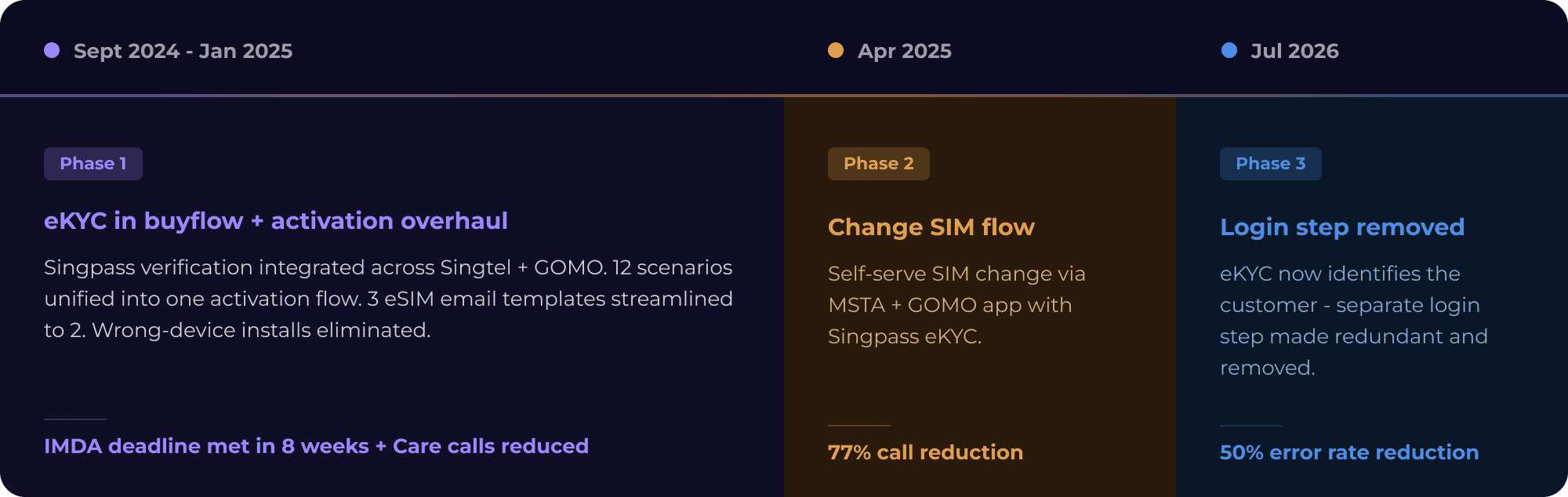
PHase 1
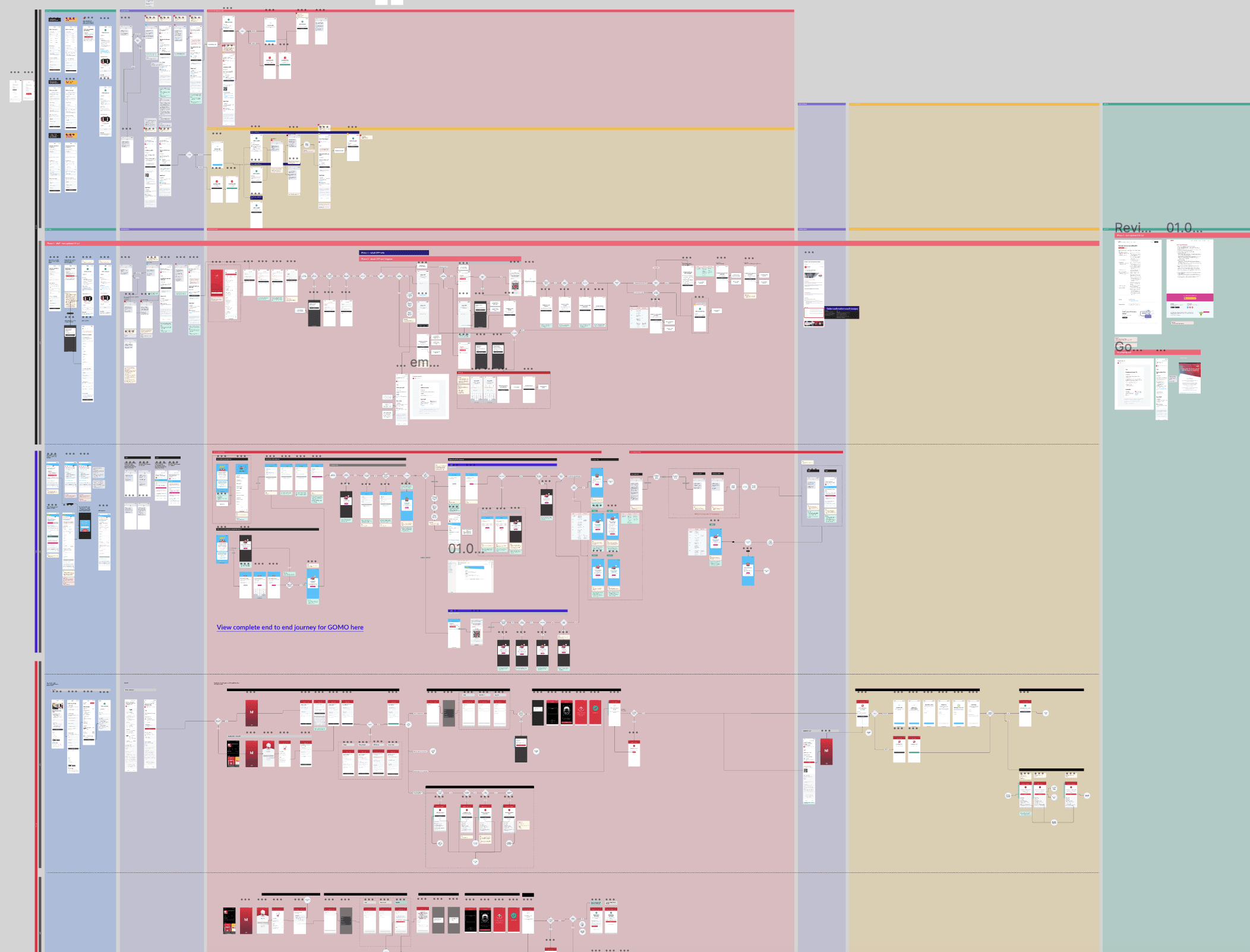
We had eight weeks to incorporate Singpass eKYC into our buyflows — across Singtel and GOMO and create a new user-initiated SIM activation flow post-sale.
THE COMPLEXITY
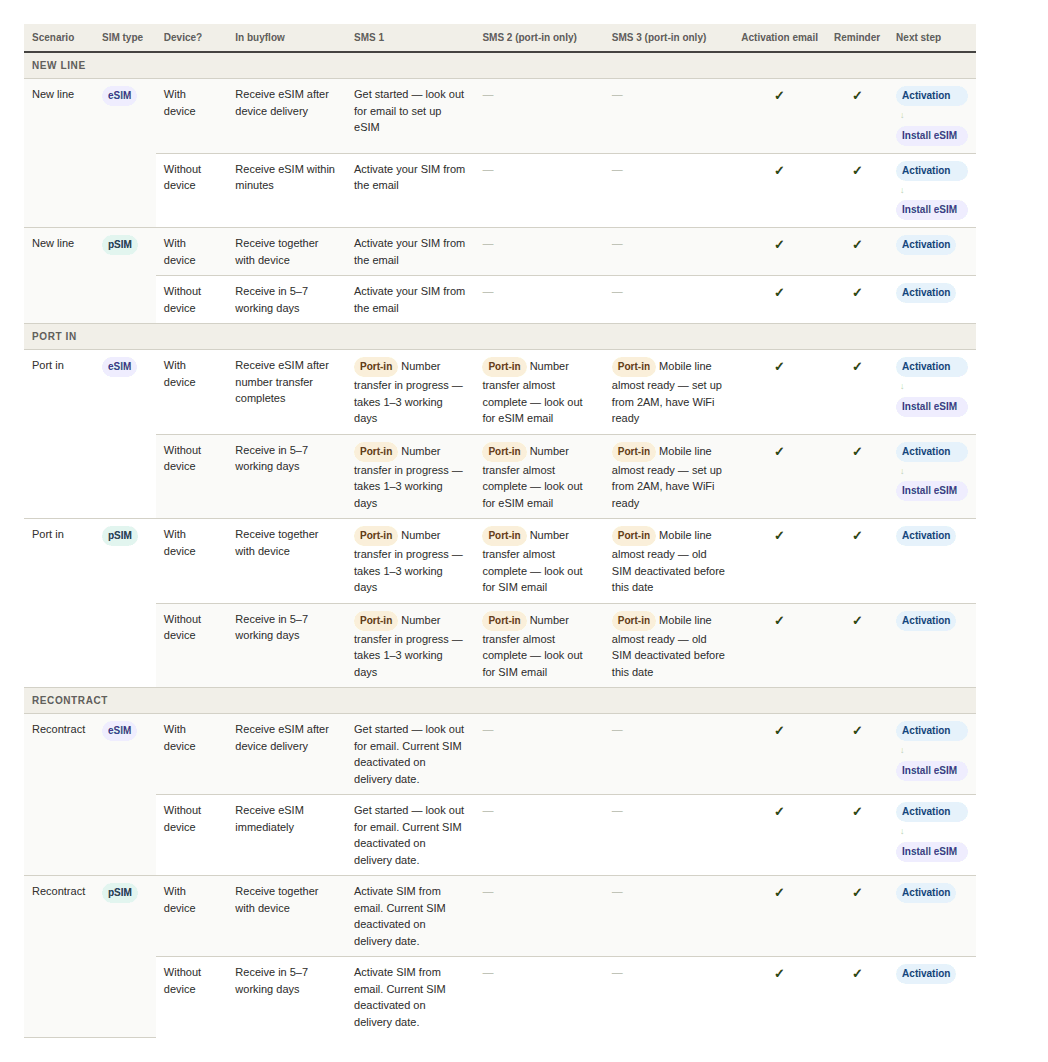
The eKYC in buyflow was easy, the user-initiated activation was not.

Principal
All the complexity sits in the backend logic and the 12 copy variants. The customer sees one button, one app, one flow.
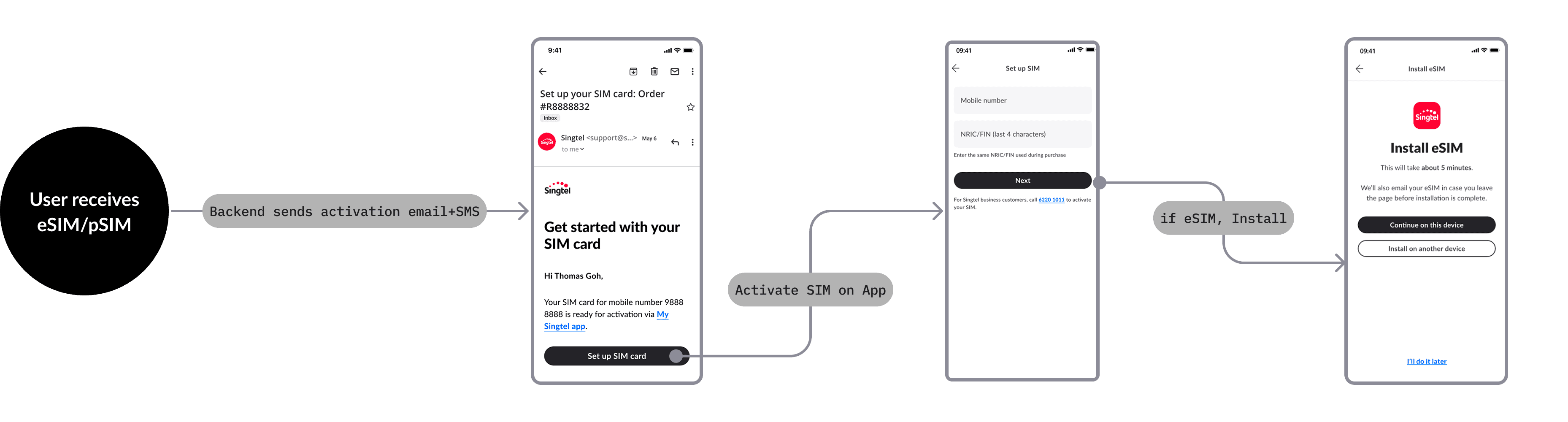
We took the opportunity to enhance the current email templates that were not working
Research showed customers weren't reading the eSIM installation email — they scrolled straight to the QR code, often scanning it on the wrong device. Since each QR can only be installed once, that meant a support call and a new request. Three email templates, no gate preventing premature installation.
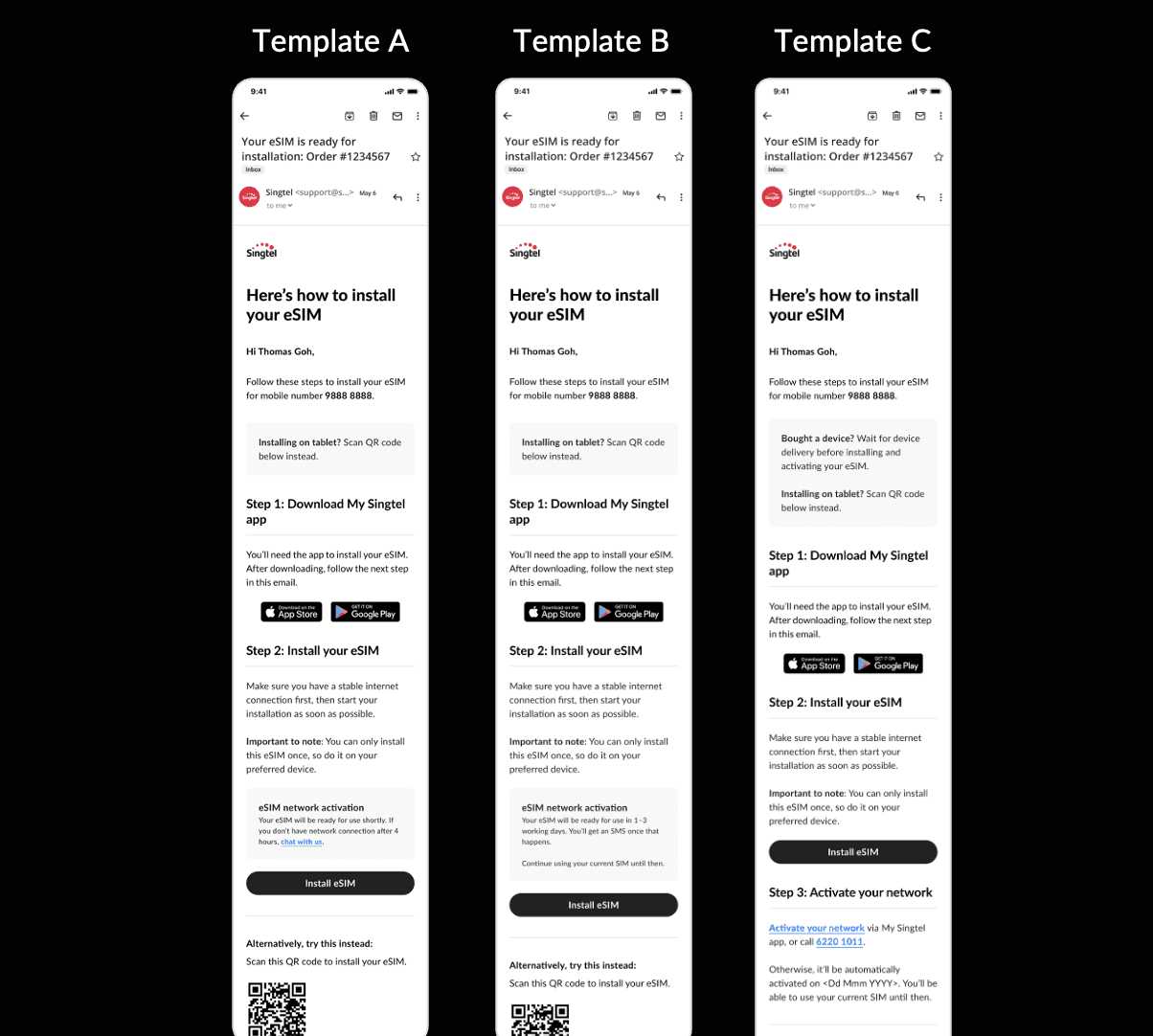
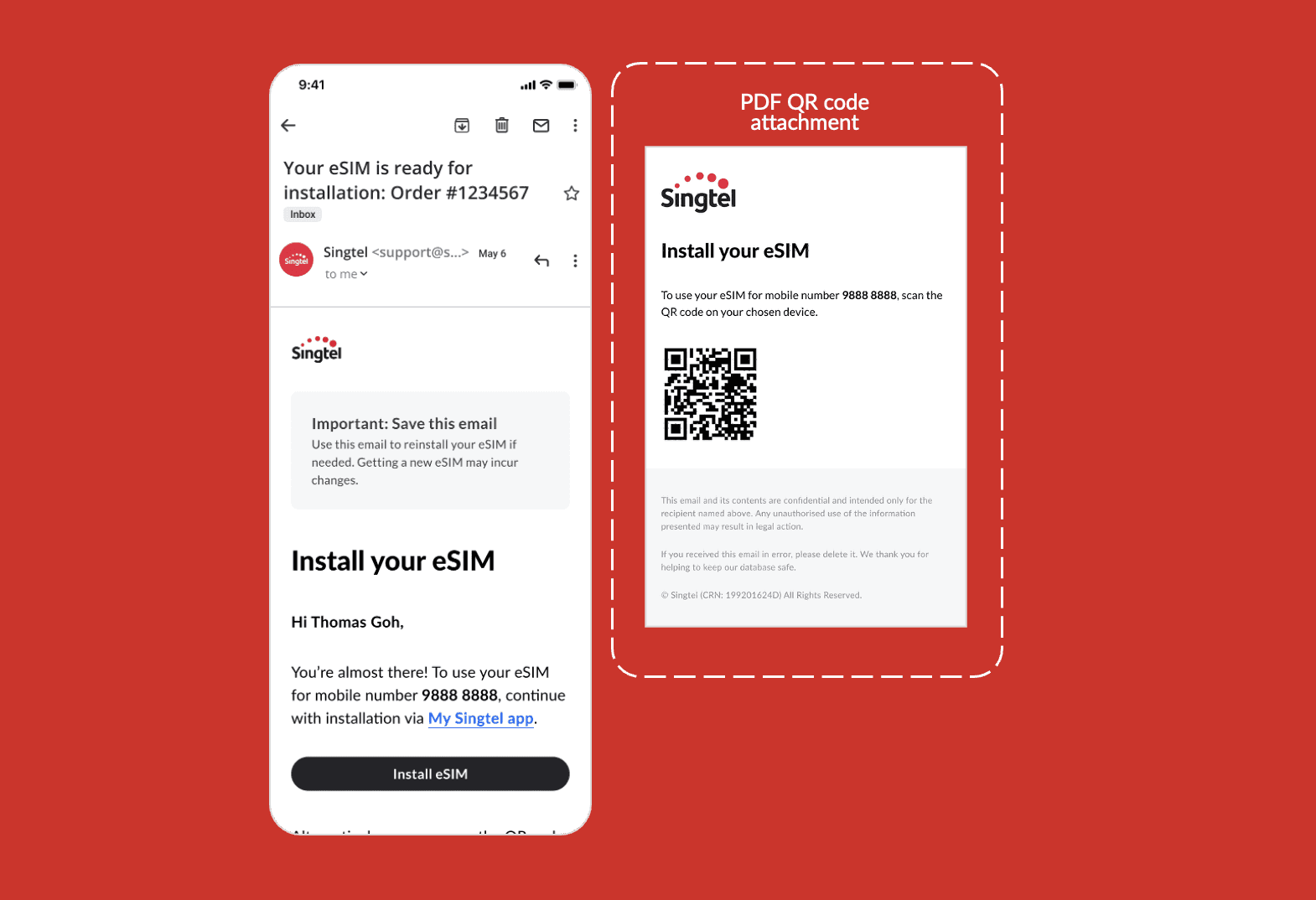
We redesigned to 1 email
Sent only after activation user activates the eSIM. The sequence itself prevents the wrong-device problem and we allowed for the eSIM to be installed multiple times.
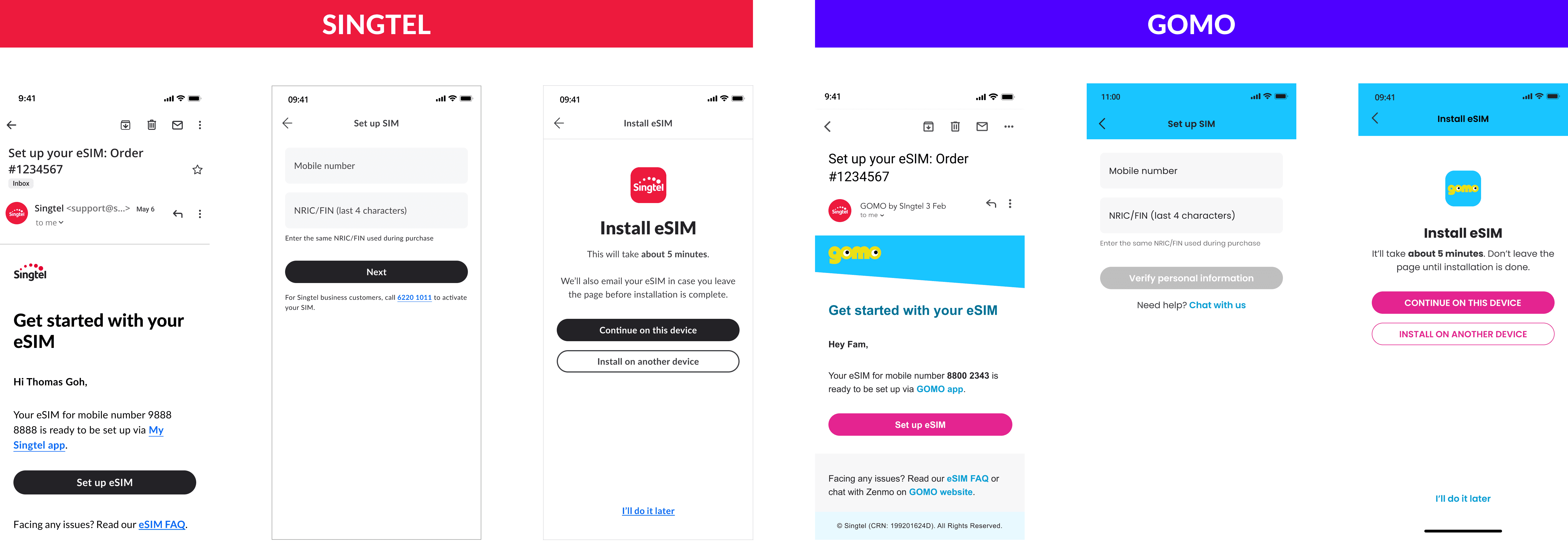
One logic, two brand voices.
We standardised flow logic across Singtel and GOMO rather than building two parallel journeys. The meaningful differentiator was tone of voice — where the content designers did heavy lifting, adapting every copy variant for each brand while the UX logic stayed consistent underneath.
Dealing with scope creep
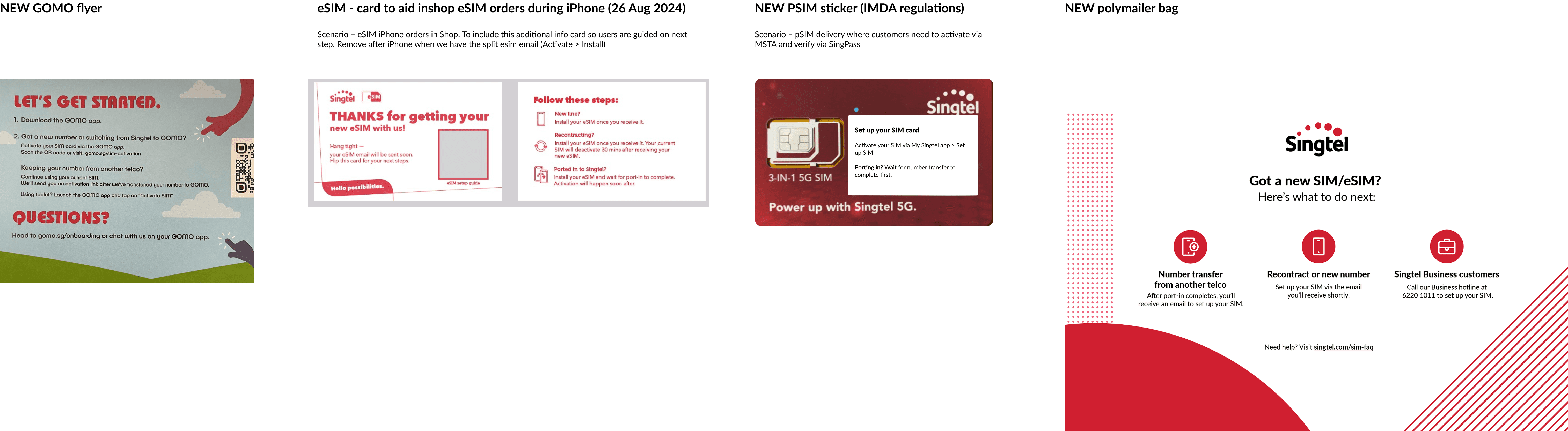
Physical collateral wasn't in scope initially. A large batch of old-design stock was already queued for printing. I rejected a sticker patch — customers were activating their own service for the first time and instructions needed to be unambiguous. I pushed for a full reprint and pulled content designers onto collateral to protect the UX designers' bandwidth on the digital flows.
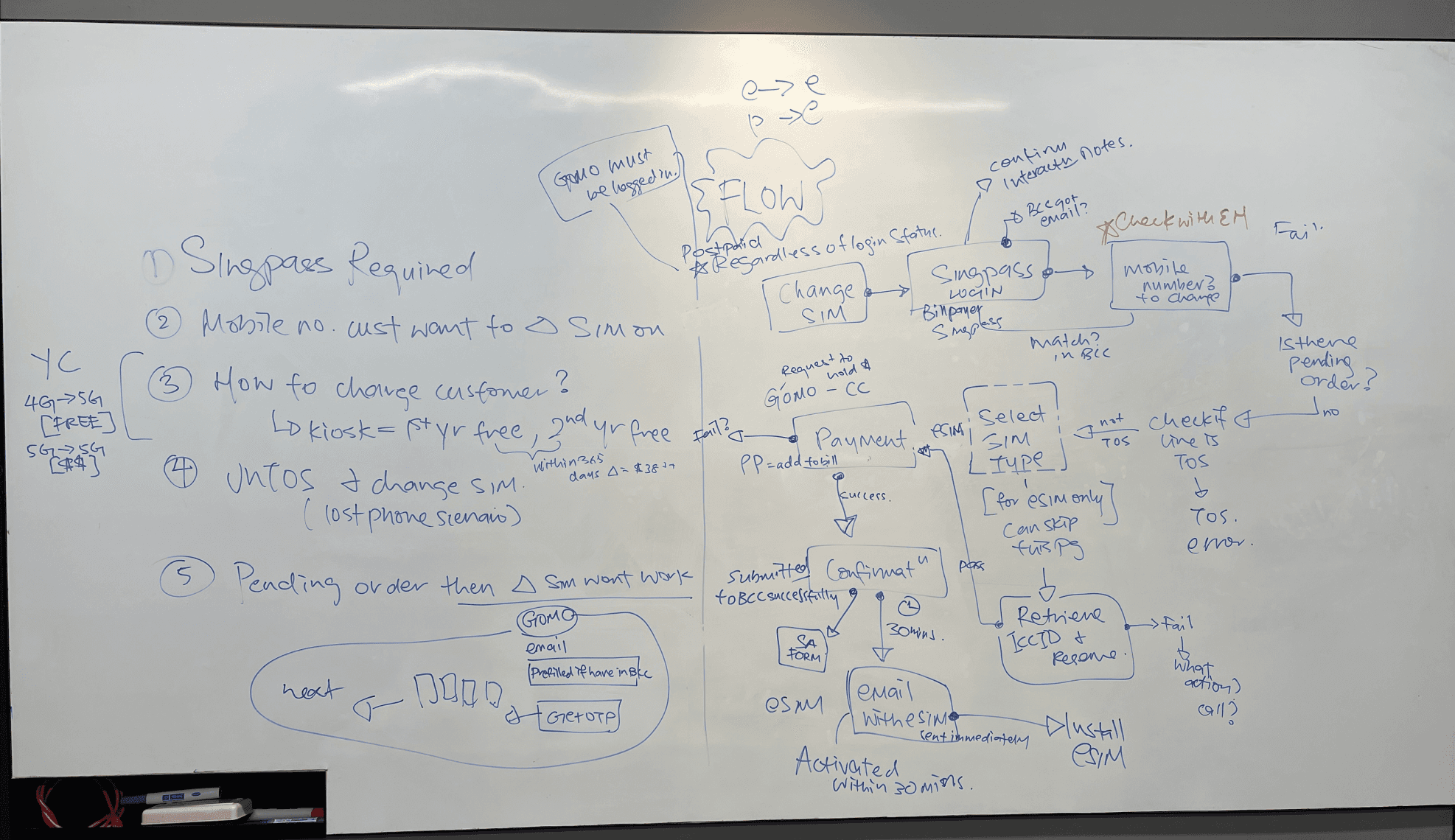
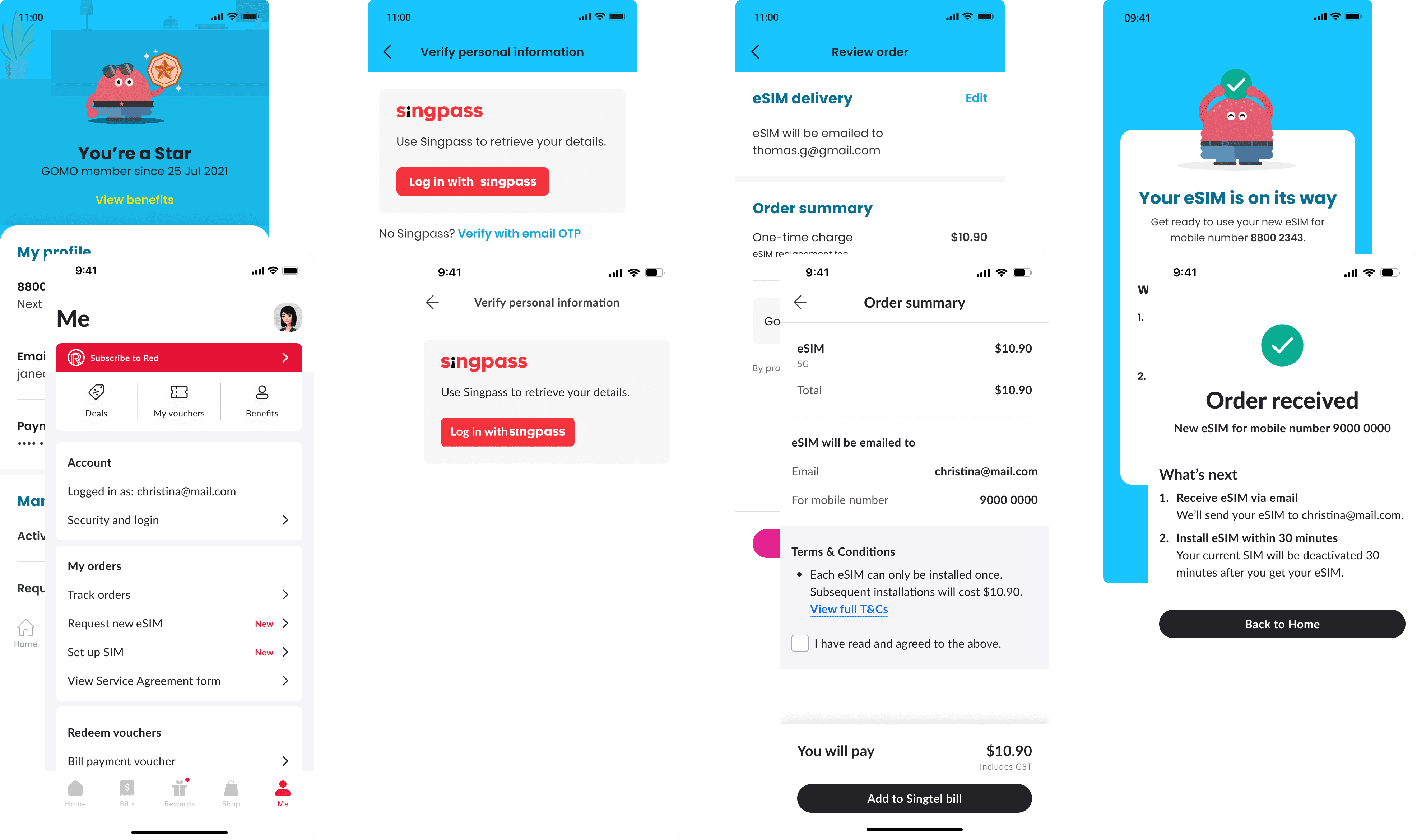
A new Change SIM flow brought self-serve SIM changes to MSTA and GOMO — with 77% fewer calls within two weeks of launch
PHASE 3 — JUL 2026
This was a separate project I initiated after recognising what the eKYC work had made possible. Because eKYC already identifies the customer during the buyflow, a standalone login step was no longer doing any unique work. We removed it from the Singtel main brand buyflow.
The result: one step added (eKYC), one step removed (login). The flow came out leaner than before the regulation existed.
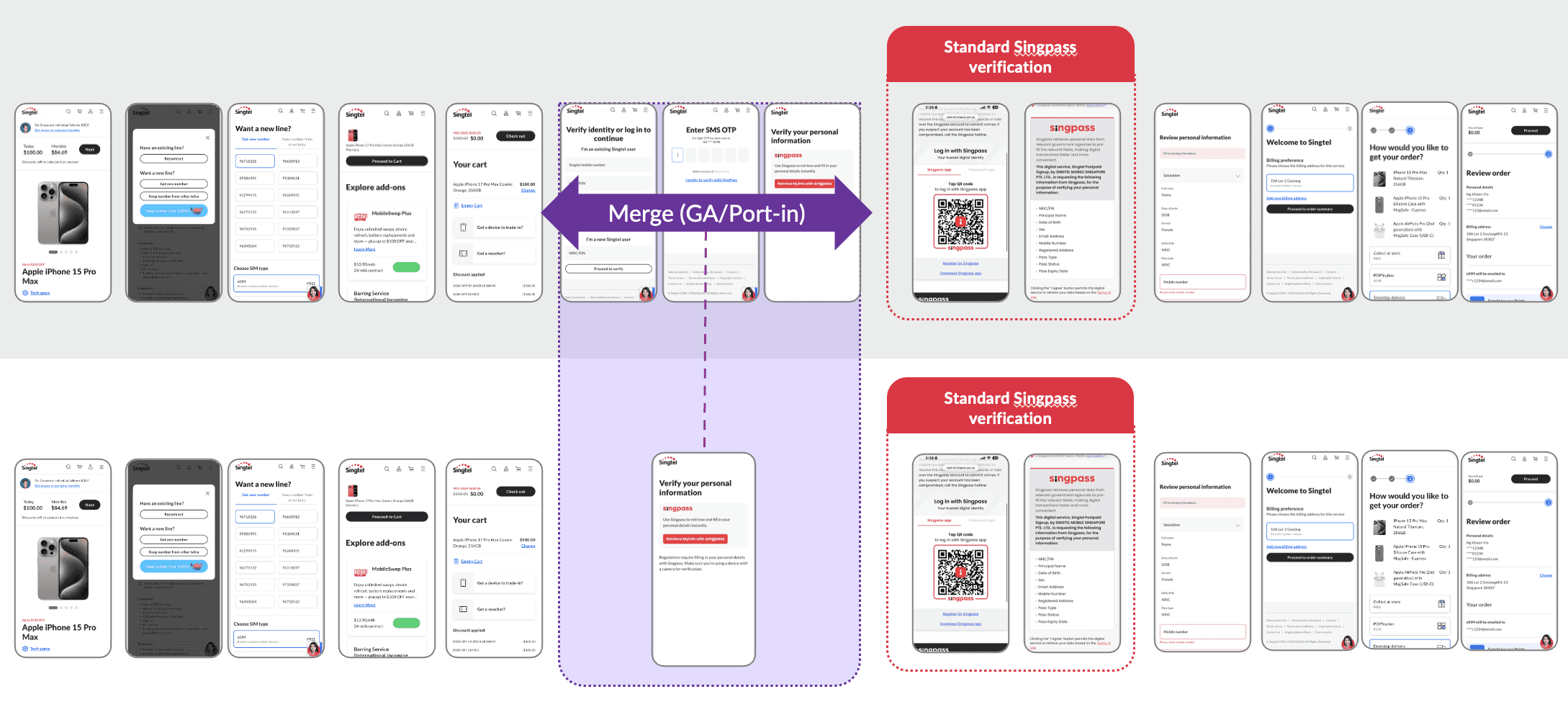
The impact was immediate:
📉 Error rate in the buyflow reduced by more than 50%
📱 Phone device sales increased 51% week-on-week
📋 SIM-only sales increased 40% week-on-week
OUTCOMES
What started as an 8-week compliance sprint became a sustained body of work — each phase building on the last, with measurable results at every stage.